 Now serving
 Now serving

Ionized Air Rinsing vs. Water Rinsing: Cleaning Containers Before Filling
Published
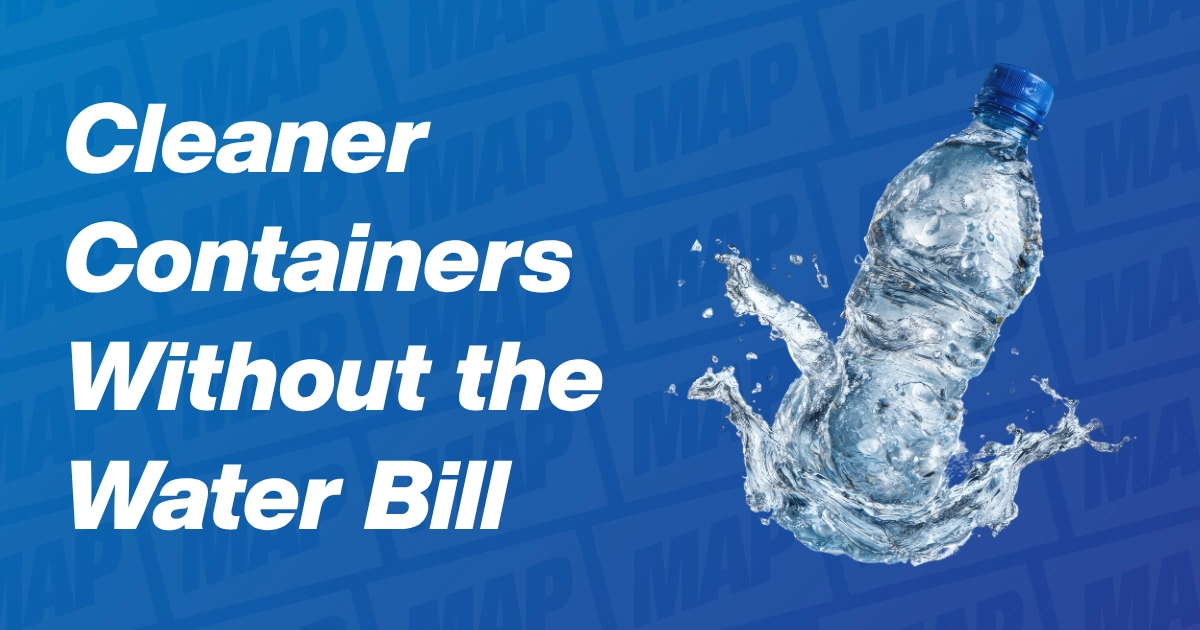
Ionized air rinsing cleans empty bottles and cans before filling by neutralizing static and blowing loose dust away, without water. Water rinsing still has a place, but it adds water, drying, and drain costs. Choose the method that fits your containers, line speed, and food safety plan, and confirm settings in your equipment manual.
Why Container Rinsing Before Filling Matters
Empty containers pick up dust, fibers, and small debris while they are stored, moved, and unpacked. Paxton Products explains that static charges make dirt, dust, and contaminants cling to surfaces. Without static removal on bottles and cans, a quick blast of plain air may not set that debris free. If the debris stays in the container, it goes into the filler with the product.
The rinsing method also drives operating cost. The Compressed Air Challenge reports that electricity is by far the largest cost of a compressed air system, and a 100-hp compressor's yearly electricity charges can reach $50,000. Water rinsing has costs too, and Paxton notes that taking water out cuts filtration, drying, and disposal costs.
So, treat container rinsing as both a quality decision and an operating cost decision. Start by listing what your current rinser uses each shift: water, compressed air, drying time, and cleanup. That list makes the comparison below much easier.
How Ionized Air Rinsing Works
Ionized air rinsing does two jobs at once. First, an ionizing bar inside the air knife or nozzle manifold neutralizes the static charge that holds debris to the container. Then high-speed air from a blower carries the loose debris away, as Paxton describes.
Some systems also collect the debris instead of just blowing it off. The Paxton Ionizing Air Rinser Vac pairs the rinser with vacuum to contain and collect dust, which helps keep it from settling back onto containers. It comes in a closed-loop design with one blower or a two-blower design, based on the application.
Blower-Driven vs. Compressed-Air Rinsers
Many air rinsers run on plant compressed air. That air can carry water and oil when compressors, dryers, or filters fall behind, a problem covered in how compressed air quality affects packaging equipment. Paxton's blower-driven systems remove that contamination risk because they do not use compressed air. Paxton also states that when a plant eliminates compressed air systems, its ionizing rinsing systems can reduce energy use by as much as 80%.
Ionized Air Rinsing vs. Water Rinsing: A Side-by-Side Look
Both methods remove debris before filling, but they handle water, energy, and moisture in very different ways. The table below is based on Paxton's product information and common line practice.
| Factor | Ionized air rinsing | Water rinsing |
|---|---|---|
| How it cleans | Neutralizes static, then blows loose debris away | Flushes debris out with water |
| Utilities | Blower power, with no water or compressed air in blower-driven systems | Water supply, plus filtration, drying, and disposal |
| Moisture left behind | None added | Containers may need drying before filling |
| Moisture-related microbial risk | Lower, since no water is added | Higher if moisture stays on containers |
| Sanitizing | Not a sanitizing step | Can be part of a wash and sanitize process |
| Best fit | Dry dust, fibers, and particles on bottles, cans, jars, and trays | Residue that air cannot lift, or lines that must wash and sanitize |
Air rinsing has one clear limit. It removes loose, dry debris, but it does not sanitize containers. Some plants wash or sanitize containers because of their food safety plan, customer specs, or rules for their product category.
So, keep any required washing or sanitizing step in place, and treat ionized air rinsing as a dry-debris step. If you plan to replace a water rinser, review the change with your quality team first. Your equipment distributor can help you match the system to those needs.
Where an Ionized Air Rinser Fits Best
Paxton offers dedicated bottle and can rinsers, and it custom-engineers its air delivery systems for each product and line speed. Each ionized air system pairs a PX-Series centrifugal blower with an ionizing air knife or nozzle manifold sized to the target and line speed.
- Ionizing Bottle Rinser: Uses a custom 304 stainless steel air knife and is qualified for plastic and glass bottles from 8 oz to 2 liters. It fits PET and glass bottle lines running at high or low speeds.
- Ionizing Can Rinser: Uses a custom 304 stainless steel nozzle manifold and is qualified with common test media such as styrodot and cardboard dust. It fits canning lines that rinse cans just before the filler.
- Ionizing Air Rinser Vac: Adds vacuum to the rinser to collect debris in an enclosure. It fits lines where dust must be captured, not just blown into the room.
Paxton's brochure also lists jars, crates and trays, pouches, and pharmaceutical and nutraceutical packaging among its ionized air applications. That range makes the technology worth a look on more than just beverage lines.
What to Check Before You Add an Air Rinser
The right rinser depends on your containers, your conveyor, and your plant. These five checks cover what a sales engineer will ask about first.
Line Speed and Container Size
Paxton sizes the air knife or nozzle manifold to the target and the line speed. Air delivery devices come in lengths from 12 inches to 10 feet, according to the product brochure. PX-Series blowers range from 2 to 20 hp, with air flows from 100 to 1,500 cfm. So, gather your container sizes, conveyor speeds, and changeover list before the system is sized.
Container Position and Mounting
Paxton's installation and maintenance manual places the air knife discharge 0.5 to 1 inch below the bottle or can opening, and a nozzle manifold about 1 inch below it. The mounting brackets are built in the field to fit your conveyor rails, with some room to shift the rinser off center of the opening. That means the rinser has to match how containers move through your conveyor. Ask how your current layout and container orientation will affect the install.
Debris Collection, Washdown, and Filtration
Each Paxton ionized air system includes a blower enclosure that protects the blower during washdown and cuts noise, per its product page. Air entering the blower passes through 5-micron filtration, and air leaving it passes through HEPA filtration. The air knives, manifolds, and mounting hardware are 304 stainless steel for washdown areas. If loose dust in the room is a concern, ask about a vacuum option or the Rinser Vac.
Controls and Alarms
The ionizing power supply is available with or without control relays. The Paxton manual shows that a high-voltage alarm relay can trigger a light or buzzer if the high voltage fails. The unit can also be turned on and off remotely through a PLC contact or a switch. That gives engineering a way to tie the rinser into line startup and fault logic.
Ionizing Bar Maintenance
Emitter points on the ionizing bar can collect hardened lint, grease, or debris over time. The Paxton manual warns that this buildup dulls the points and lowers efficiency. Its procedure calls for locking out the blower and the power supply, then cleaning the points with a moderately stiff brush or compressed air while wearing gloves.
So, add ionizing bar cleaning to your preventive maintenance plan. Set the interval using your equipment manual and the dust levels in your plant.
Where Mid-America Packaging Helps
Mid-America Packaging (MAP) sells, installs, and services Paxton ionized air rinsing systems and blowers for packaging lines. Local sales engineers in St. Louis, Houston, Dallas-Ft. Worth, Kansas City, and Tulsa can review your containers, line speed, and layout before you commit. MAP's field service technicians handle installation and preventive maintenance once the rinser is running.
Frequently Asked Questions About Ionized Air Rinsing
Does ionized air rinsing sanitize containers?
No. It removes loose dust and static-bound particles, but it is not a sanitizing step. Keep any washing or sanitizing step your food safety plan requires, and ask your equipment distributor how an air rinser fits around it.
Can ionized air rinsing replace water rinsing?
It often can when the goal is removing dry debris before filling. Confirm the fit for your containers, line speed, and quality rules with your equipment manual and your equipment distributor before you remove a water rinser.
How often should you clean an ionizing bar?
It depends on how much dust, lint, and grease your line sees. Follow the interval in your equipment manual, and lock out the blower and power supply before you clean.
Do ionized air rinsers need compressed air?
Blower-driven ionized air rinsers do not use compressed air. They use a centrifugal blower instead. Check your equipment manual or ask your equipment distributor which type your line runs.
Talk to Your Mid-America Packaging Rep About Ionized Air Rinsing
If water use, compressed air costs, or dust in containers is on your list for 2027, start with a conversation with your local Mid-America Packaging rep. Your rep can review your containers, conveyor, and current rinsing step, then help you decide whether a Paxton ionized air rinser fits. Ask for an equipment recommendation to see what the change would look like on your line.
Sources
- Ionizing Rinsing Systems, Paxton Products
- Ionizing Bottle Rinser, Paxton Products
- Ionizing Can Rinser, Paxton Products
- Ionized Air Rinsing System Product Brochure, Paxton Products (July 25, 2022)
- Installation and Maintenance of Ionizing Air Devices, Paxton Products (June 23, 2022)
- PX-Series Centrifugal Air Blower, Paxton Products
- Compressed Air Systems Fact Sheet #9: Compressed Air System Economics, Compressed Air Challenge (May 2026)
Talk with a Mid-America Packaging representative today!
We have Mid-America Packaging representatives across the country who can help you compare products, troubleshoot line issues, or arrange on-site testing.