 Now serving
 Now serving

Thermal Transfer Overprinting: When TTO Is Right for Flexible Packaging
Published
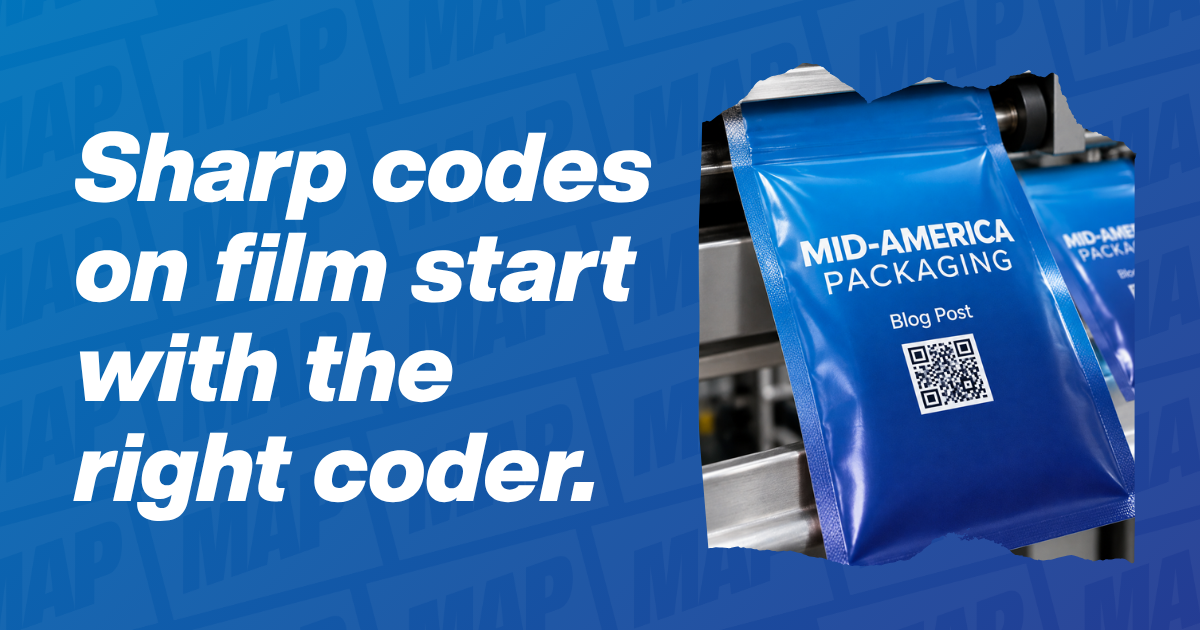
Thermal Transfer Overprinting (TTO) is a contact coding method that uses heat to move ink from a ribbon onto flexible film, pouches, and labels. Choose TTO for sharp barcodes and dense text on flat film. Choose Continuous Inkjet (CIJ) for non-contact printing. Match the print mode to your machine and the ribbon to your film. Confirm settings in your equipment manual.
Why Coding on Flexible Packaging Matters
Flexible packaging keeps growing, so more lines need reliable codes on film. The Flexible Packaging Association (FPA) reports that U.S. flexible packaging sales reached $42.6 billion in 2024, up 2.9% from 2023. Each bag, pouch, and wrapper on those lines needs a date or lot code that people and scanners can read. A missing or smeared code can mean rework, scrap, or a hold on finished goods.
Codes are also carrying more data. In an August 2026 position paper, GS1 states the industry goal that all retail point-of-sale systems should read a defined set of GS1 2D barcodes by the end of 2027, alongside linear barcodes. GS1 notes that these 2D codes can carry best-before dates, expiry dates, and batch or lot codes. That puts more pressure on coders to print small, dense codes cleanly.
Traceability rules are part of the picture, too. As of November 2026, the FDA Food Traceability Rule has a compliance date of July 20, 2028, and Congress has directed FDA not to enforce it before then. The rule sets record-keeping requirements for foods on FDA's Food Traceability List. It does not name a coding technology, so it does not decide between TTO and CIJ for you.
So, plan your coder around the codes you will need in the next few years, not only the codes you print today. Ask whether your current coder can print a 2D code on your film at your line speed.
How Thermal Transfer Overprinting Works
A TTO printer has a printhead lined with tiny heating elements. Videojet's introduction to TTO walks through the process. The film passes under the printhead and over a hard rubber platen. The printhead presses the ribbon against the film, and the heated elements melt ink from the ribbon onto the film. Then the printhead lifts and waits for the next print signal.
Because TTO touches the package, it mounts right on the packaging machine or labeler, close to the point of packaging. Videojet notes that TTO can go from power-up to printing in under 60 seconds, with no warm-up period like a hot stamp coder. Print jobs are stored on the controller, so a code change between products does not mean swapping metal type.
Intermittent vs. Continuous TTO
TTO printers come in two motion types. Intermittent TTO prints while the film is stopped, using the machine's pause between strokes. Continuous TTO prints while the film keeps moving, with the printhead pressed against a platen roller and print speed matched to the film. The way your Vertical Form-Fill-Seal (VFFS), Horizontal Form-Fill-Seal (HFFS), or pouch machine moves the film decides which type fits.
FlexPackPRO builds both intermittent and continuous models in each of its main TTO series. Its 2025 product guide lists a 300 dpi printhead on every model, with these widths and top speeds:
| FlexPackPRO Series | Printhead Width | Max Print Speed, Standard Models (Intermittent / Continuous) | Manufacturer's Noted Fit |
|---|---|---|---|
| 130 Series | 32 mm (1.3 in) | 500 / 1,000 mm/s | Small-footprint expiration dates and lot codes |
| 210 Series | 53 mm (2.1 in) | 500 / 1,000 mm/s | Heavy-volume lines and the broadest model range |
| 420 Series | 107 mm (4.2 in) | 400 / 600 mm/s | Larger codes, logos, and ingredient or nutrition panels |
FlexPackPRO also lists a 500 Series with a 128 mm printhead and a 5 x 8 in. print area. Its XT models hold up to 1,000 m of ribbon, compared with 680 m on standard models. Standard ribbon width runs from 35 mm on the 130 Series to 110 mm on the 420 Series, and every model listed has a 7-inch color touchscreen with USB, Ethernet, and RS232 ports.
So, when you choose a TTO printer for flexible packaging, size the printhead to the largest code you need to print, not the smallest. A wider head than you need runs a wider ribbon on every print.
TTO vs. CIJ on Flexible Packaging
CIJ is the main alternative on many film lines. Hitachi describes its CIJ printers as non-contact, with ink droplets traveling 5 to 20 mm from the printhead to the product. Hitachi's CIJ page lists uneven surfaces, delicate products, and flexible packaging and films among its uses. Hitachi's printers use an IP65-certified design to protect internal parts from dust and water splashes, and the UX2 Series is available with an automatic Safe-Clean Station for the printhead.
Videojet's 2026 flexible film coding guide says coders are usually chosen by substrate, production speed, durability needs, and sustainability goals. It describes TTO codes as durable and smudge-resistant, and well suited to form-fill-seal machines. It also notes that CIJ can code film before or after the package is formed.
| Factor | TTO | CIJ |
|---|---|---|
| How it prints | A heated printhead presses a ribbon onto the film over a platen | Ink droplets jet onto the product without contact |
| Best fit | Flat film on VFFS, HFFS, thermoform, and pouch machines, plus labels | Uneven, curved, or delicate surfaces and formed packages |
| Code style | A 300 dpi image for text, logos, and barcodes | Characters and codes built from ink droplets |
| Consumable | Wax/resin or resin ribbon | Ink and make-up fluid |
| Setup need | A flat print zone with a platen under the film | A steady print distance, 5 to 20 mm on Hitachi CIJ |
So, lean toward TTO when you print on flat film before the package is formed and need sharp barcodes or dense text. Lean toward CIJ when the surface is uneven, the package is already formed, or contact is a concern. If you already run CIJ, this guide to inkjet preventative maintenance covers which tasks operators can own.
Thermal Transfer Ribbon Selection and Daily Checks
The ribbon is the TTO consumable, and it is a material choice on your side of the line. Videojet's TTO introduction explains that a ribbon is a thin layer of dried ink on polyester film. The ink is either a wax/resin mix or resin only. Wax/resin is often used for general-purpose film coding, while resin-only ribbons are more common where heat or chemicals make adhesion harder.
Videojet's 2026 guide adds that ribbons come in several colors when you need more contrast. FlexPackPRO lists ribbon saver features on every model in its 2025 guide, which helps limit wasted ribbon between prints.
So, test a ribbon on your actual film at line speed before you lock it in. Ask your ribbon supplier and your equipment distributor or manufacturer to confirm that the ribbon suits your printhead and film.
Common TTO Code Problems and First Checks
Most TTO code problems follow a few repeat patterns. This print code troubleshooting guide notes that misregistration on TTO systems often comes from ribbon tension, sensor timing, or web tracking drifting out of calibration. Videojet also names ribbon tension and movement as critical settings on any ribbon-based coder.
| Symptom | Common Cause | First Check |
|---|---|---|
| Missing lines or dots in characters | A worn or damaged print element | Clean the printhead per your manual, and call service if the gap stays |
| Code drifts out of position | Ribbon tension, sensor timing, or web tracking out of calibration | Check the print trigger sensor and the film path |
| Ribbon wrinkles or breaks | Ribbon tension or threading is off | Re-thread the ribbon using the cassette diagram |
| Code smudges or rubs off | Ribbon grade not matched to the film or conditions | Review the ribbon grade with your supplier |
So, plan ribbon changes as scheduled stops, and use each change to run these checks. Videojet notes that once you know how many codes you get per roll, you can predict when each ribbon change will come. Follow the cleaning steps and intervals in your equipment manual, since they vary by model.
Where Mid-America Packaging Helps
Mid-America Packaging (MAP) sells, installs, and services FlexPackPRO TTO coders and Hitachi CIJ printers. Local sales engineers can review your film, machine motion, and code content, then set up an equipment demo or trial. MAP's field service technicians handle installation, preventive maintenance, and hands-on training for your operators.
Frequently Asked Questions About Thermal Transfer Overprinting
What is thermal transfer overprinting used for?
TTO prints date codes, lot codes, barcodes, and text directly onto flexible film, pouches, and labels. Check your equipment manual, and ask your equipment distributor whether TTO fits your film and machine.
Is TTO better than CIJ for flexible packaging?
It depends on the package and the line. TTO suits flat film and dense codes, while CIJ suits non-contact printing on uneven or formed packages. Your equipment distributor can help you compare both on your own packages.
What is the difference between intermittent and continuous TTO?
Intermittent TTO prints while the film is stopped, and continuous TTO prints while the film is moving. Match the mode to how your packaging machine moves the film, and confirm setup in your equipment manual.
Which thermal transfer ribbon should I use?
Wax/resin ribbons are often used for general-purpose film coding, while resin ribbons suit harsher heat or chemical conditions. Confirm the right ribbon in your equipment manual and with your equipment distributor.
Talk to Your Mid-America Packaging Rep About Thermal Transfer Overprinting
If you are choosing a coder for a bagger, flow wrapper, or pouch line, it's worth a conversation with our team. Your local MAP rep can look at your film, machine motion, and code content, then recommend a FlexPackPRO TTO or Hitachi CIJ setup that fits. You can also request an equipment demo or a service visit from a MAP field technician.
Sources
- Flexible Packaging Association: FPA Publishes 2025 State of the U.S. Flexible Packaging Industry Report (Apr. 8, 2026)
- GS1: Migration to a Single GS1 Conformant 2D Barcode for Retailer Private Label, Retailer-Exclusive and In-Store Labelled Products, Release 2.0 (Aug. 2026)
- U.S. Food and Drug Administration: FSMA Final Rule on Requirements for Additional Traceability Records for Certain Foods (content current as of Nov. 4, 2026)
- Videojet: An Introduction to Thermal Transfer Overprinting Technology (2014)
- FlexPackPRO: 2025 Product Guide, Thermal Transfer Overprinters for Flexible Packaging (Apr. 2025)
- Hitachi Industrial Equipment Systems Europe: Continuous Inkjet Printer (updated Sept. 18, 2026)
- Videojet: Flexible Film Coding, a Guide to Choosing the Right Technology for Improved Product Safety and Compliance in 2026 (Jan. 8, 2026)
Talk with a Mid-America Packaging representative today!
We have Mid-America Packaging representatives across the country who can help you compare products, troubleshoot line issues, or arrange on-site testing.